


The science within the ritual
Each ingredient tells a story of origin, craft, and care.
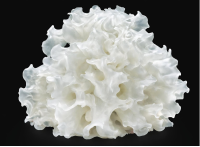
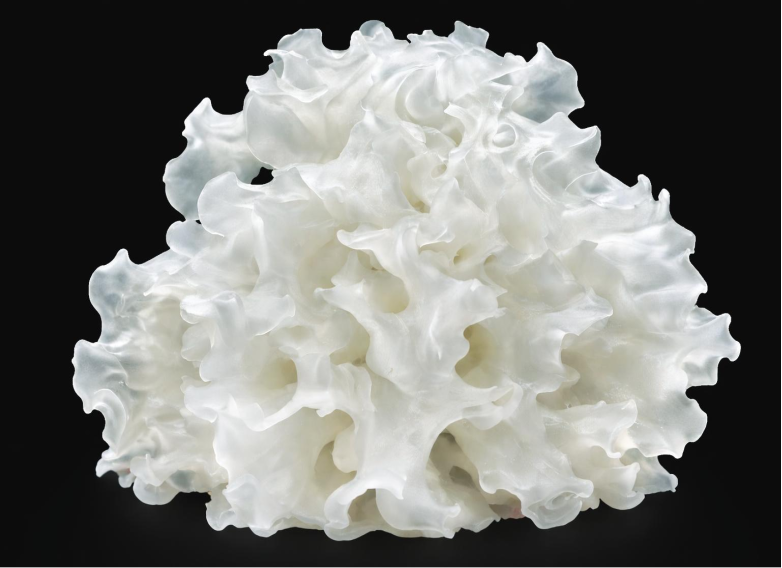
SNOW MUSHROOM
Found growing on ancient hardwood trees deep in the humid forests of Asia, Snow Mushroom (Tremella Fuciformis) has been harvested for over a thousand years.
Prized in Chinese imperial courts not just as a delicacy, but as a beauty secret passed between generations of women who understood what modern science is only now confirming.
Its polysaccharides form a soft, moisture locking matrix that sits on the skin and draws water in from the surrounding environment.
Think of it like hyaluronic acid but smarter. Where hyaluronic acid pulls moisture in, Snow Mushroom also forms a breathable film that seals it there. The result is hydration that actually stays rather than evaporating within hours.
With continuous use, the skin becomes visibly more plump and supple. Surface texture smooths out, elasticity improves, and the complexion takes on a quiet luminosity that well moisturised skin simply has and dry skin never does.

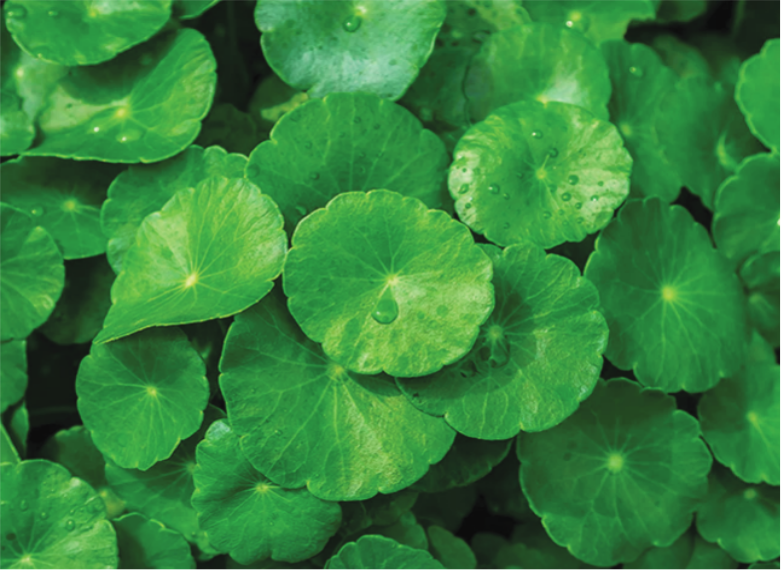
MADECASSOSIDE
Found in the highlands of Asia and parts of Africa, Centella Asiatica is one of the oldest medicinal plants ever documented. It has been used for centuries across Ayurvedic and traditional Chinese medicine, applied to wounds, burns, and troubled skin long before laboratories existed to explain why it worked.
Madecassoside is its most potent extract. The part modern science isolated, refined, and confirmed as the active responsible for everything traditional healers already knew.
It works by accelerating the skin's own repair process. Where damaged skin would normally take weeks to recover, Madecassoside shortens that significantly by stimulating collagen production and calming the inflammation that slows healing down.
The skin has a natural ability to heal itself. What Madecassoside does is simply remove what gets in the way of that. Inflammation settles, collagen rebuilds, and the process that normally drags on for weeks moves the way it was always supposed to.
Dark marks from old blemishes begin to fade. Redness that never quite went away starts to. And over time the skin stops reacting as dramatically to things that once set it off entirely.
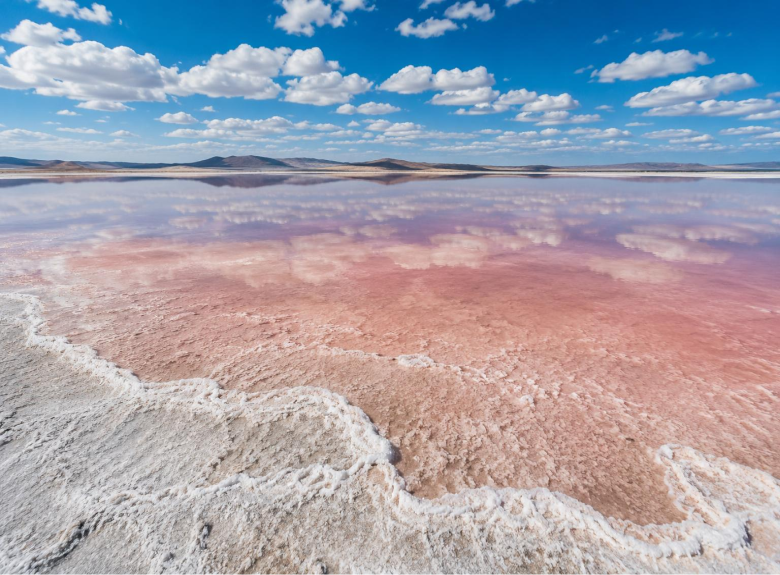
ECTOIN
In the 1980s a group of microbiologists were studying life in the most hostile environments on earth. Salt lakes so dense with minerals that almost nothing could survive in them. Temperatures that swung violently between extremes and air so dry it pulled moisture from anything exposed to it.
They found bacteria thriving in all of it.
What protected them was a molecule, a bacteria produced internally that shields their cells from the environment. It surrounded each cell like a water shell, stabilising everything inside against heat, cold, radiation, and dehydration at the same time. The scientists named it Ectoin, after the Wadi El Natrun salt lakes in Egypt where it was first isolated.
What interested researchers next was whether that same protection could be applied to human skin. Years of studies followed and the findings were consistent. Applied to skin cells, Ectoin formed a similar stabilising layer, reducing the cellular damage caused by UV exposure, pollution, and moisture loss in measurable and repeatable ways.
The parallel was difficult to ignore. Skin faces its own version of environmental stress every day and accumulates damage from it slowly over years. What those bacteria were doing instinctively in a salt desert, Ectoin was now doing deliberately on human skin.
It is one of the few ingredients in skincare where the science and the story point in exactly the same direction.
NANO CERAMIDES
Ceramides were first identified by scientists studying the composition of human skin in the early twentieth century. It took decades before the skincare industry understood what biochemists already knew, that the skin barrier was not a passive layer but an active structure that could be supported, damaged, and rebuilt.
This matters because ceramides make up roughly half of the outermost skin layer naturally. When that level drops through age, stress, or sun exposure, the barrier weakens and skin becomes dry and reactive in ways that applying more moisturiser on top will never fix. The problem is structural and needs to be addressed at that level.
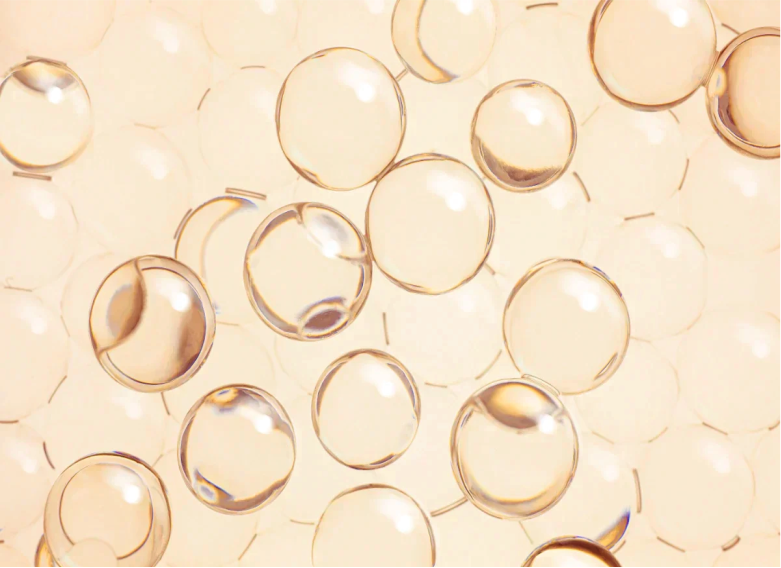
They are derived from natural sources, most commonly wheat and rice, which share a remarkably similar lipid structure to what human skin produces on its own. The nano part refers to the particle size. Standard ceramides are too large to penetrate the skin and end up sitting on the surface. Reducing them to a nano scale allows them to pass through and integrate where the skin's own ceramides actually live.
Nano ceramides do exactly that. The barrier rebuilds from within rather than being coated from above.
MALACHITE
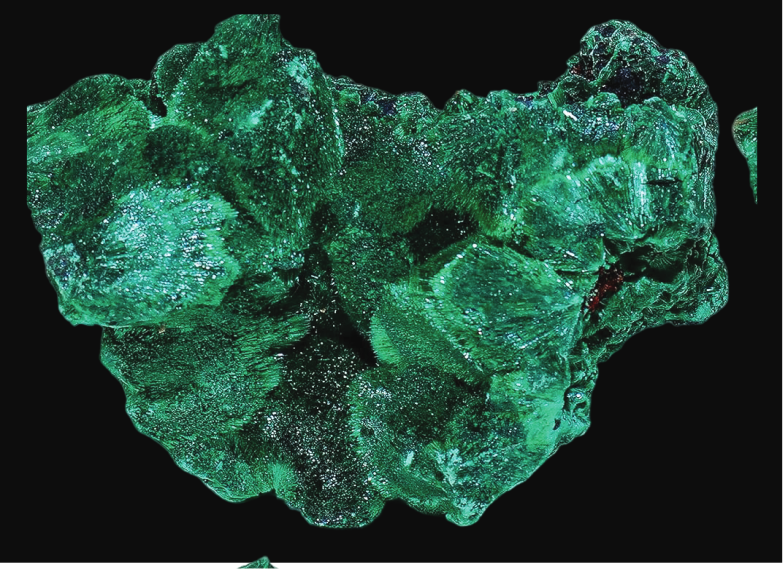
Malachite is a gemstone. Deep green, striated, found in copper rich rock formations across the Congo, Russia, and parts of the Middle East. For most of human history it was ground into pigment, used in the eye paint of ancient Egyptians, in the frescoes of Byzantine churches, and as a medicinal compound across several ancient cultures who understood instinctively that copper bearing minerals had a protective quality that ordinary materials did not.
Modern science eventually confirmed what those civilisations were working from. Malachite is exceptionally rich in copper, and copper plays a direct role in how the skin produces collagen and elastin. It also carries significant antioxidant properties, neutralising the free radicals generated by pollution and UV exposure before they can break down the skin's structural proteins.
What makes Malachite Extract particularly relevant today is what skin is consistently exposed to in urban environments. Pollution, particulate matter, and oxidative stress accumulate on the skin daily and accelerate the visible signs of ageing faster than sun exposure alone. Malachite addresses this directly, forming a kind of shield at the surface while supporting the collagen infrastructure beneath it.
It is an unusual ingredient to find in a serum. Which is precisely why it is here.
SODIUM HYALURONATE
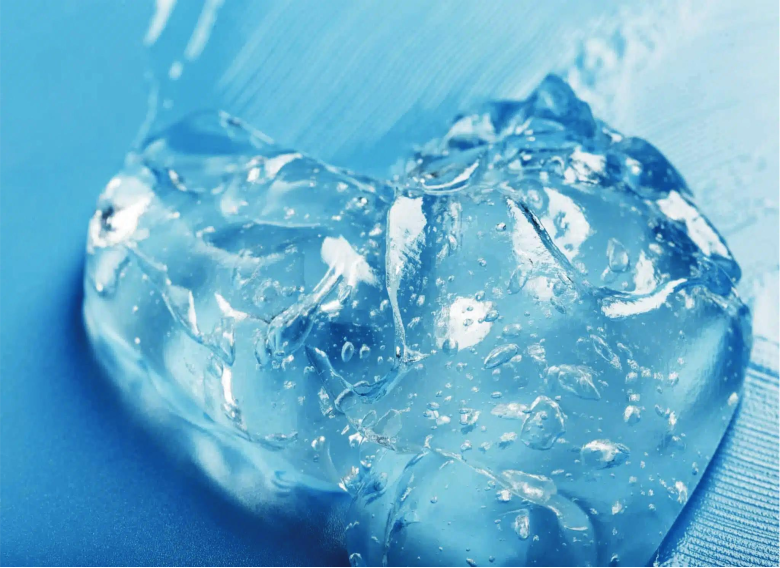
Hyaluronic acid occurs naturally in the human body. It is found in the fluid that cushions the joints, in the tissue surrounding the eyes, and throughout the deeper layers of the skin. Its entire function in the body is to attract and hold water, and it does this with remarkable efficiency; a single molecule can hold up to a thousand times its own weight in moisture.
Sodium Hyaluronate is its salt form. Where Hyaluronic Acid largely works at the surface of the skin, Sodium Hyaluronate operates at a smaller molecular size that allows it to penetrate deeper and deliver moisture into the layers beneath. The hydration it provides is not sitting on top waiting to evaporate. It is absorbed into the tissue where it actually makes a difference.
It is derived through a fermentation process, most commonly using bacterial culture, which produces a purer and more stable molecule than extraction from animal tissue ever could. Japan refined this fermentation method significantly and it remains the standard for high quality production today.
The difference in how the skin feels and retains that hydration over time is what guided the choice to use it here. Not the recognisable name, but the more effective form of it.
ASCORBYL GLUCOSIDE
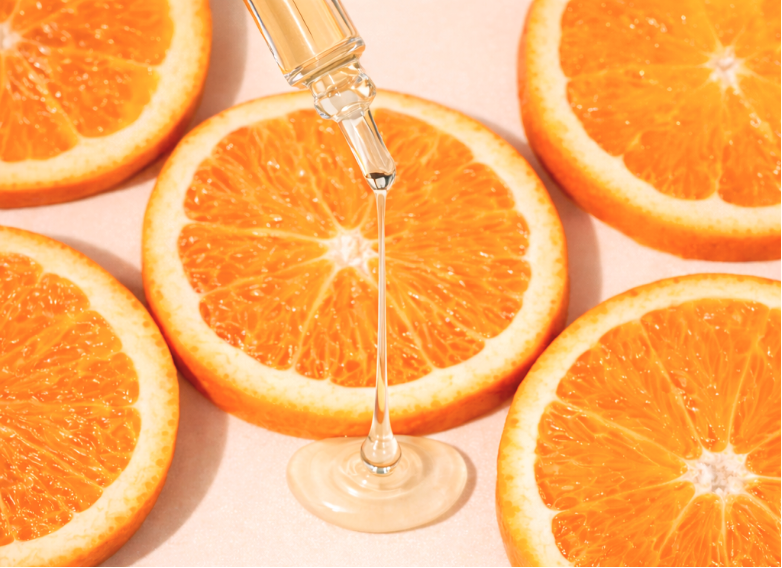
Vitamin C has been one of the most researched ingredients in skincare for decades. The science behind it is solid. The problem has always been stability, in its raw form it breaks down quickly, and by the time it reaches the skin much of its potency is already gone.
Japanese biochemists solved this by bonding Vitamin C to a glucose molecule through fermentation, which keeps it stable throughout the product's shelf life. When applied to the skin, the body's own enzymes separate the two and the Vitamin C is released and absorbed properly.
This matters because most Vitamin C products are working with a compromised ingredient before they even start. Ascorbyl Glucoside arrives intact.
Over weeks of use, skin tone begins to even out. Dark marks left behind by blemishes or sun exposure gradually become less visible. The complexion takes on a brightness that comes from the skin actually functioning well rather than anything sitting on the surface.
Sail into radiance
Join our journey of mindful beauty and receive gentle wisdom for your daily ritual